Meat Resting Time Data — Why It Matters and How Long (2026)
Resting cooked meat for 5-15 minutes reduces juice loss by 30-50 percent. The science of carryover cooking and protein relaxation, with timing guidelines by cut.
Safety fact check included
CookNest Daily articles surface source counts, timing assumptions, kitchen-test notes, and food-safety caveats. This label means editorial safety review, not a substitute for local food-code or medical guidance.
The 10 minutes between pulling a steak off the heat and slicing it determine whether the meat releases all its juices onto the cutting board or stays juicy on the plate. This rest period is one of the least intuitive but most important cooking variables — the meat looks done immediately, smells done immediately, and feels done immediately, but the chemistry happening inside the meat over the next 10 minutes determines the final texture and juice retention.
This article explains the science of meat resting, provides timing guidelines by cut, and addresses the common misconceptions about why and how rest matters. The conclusion is that adding 5-15 minutes of patience to your cooking process produces measurably juicier, more tender meat — for free.
- The science of carryover cooking and protein relaxation
- Resting times by cut size and type
- Why foil tenting matters (and why tight foil hurts)
- The “half cooking time” rule and its limits
- Tool picks across $5-105 budget range
The science — what happens during rest
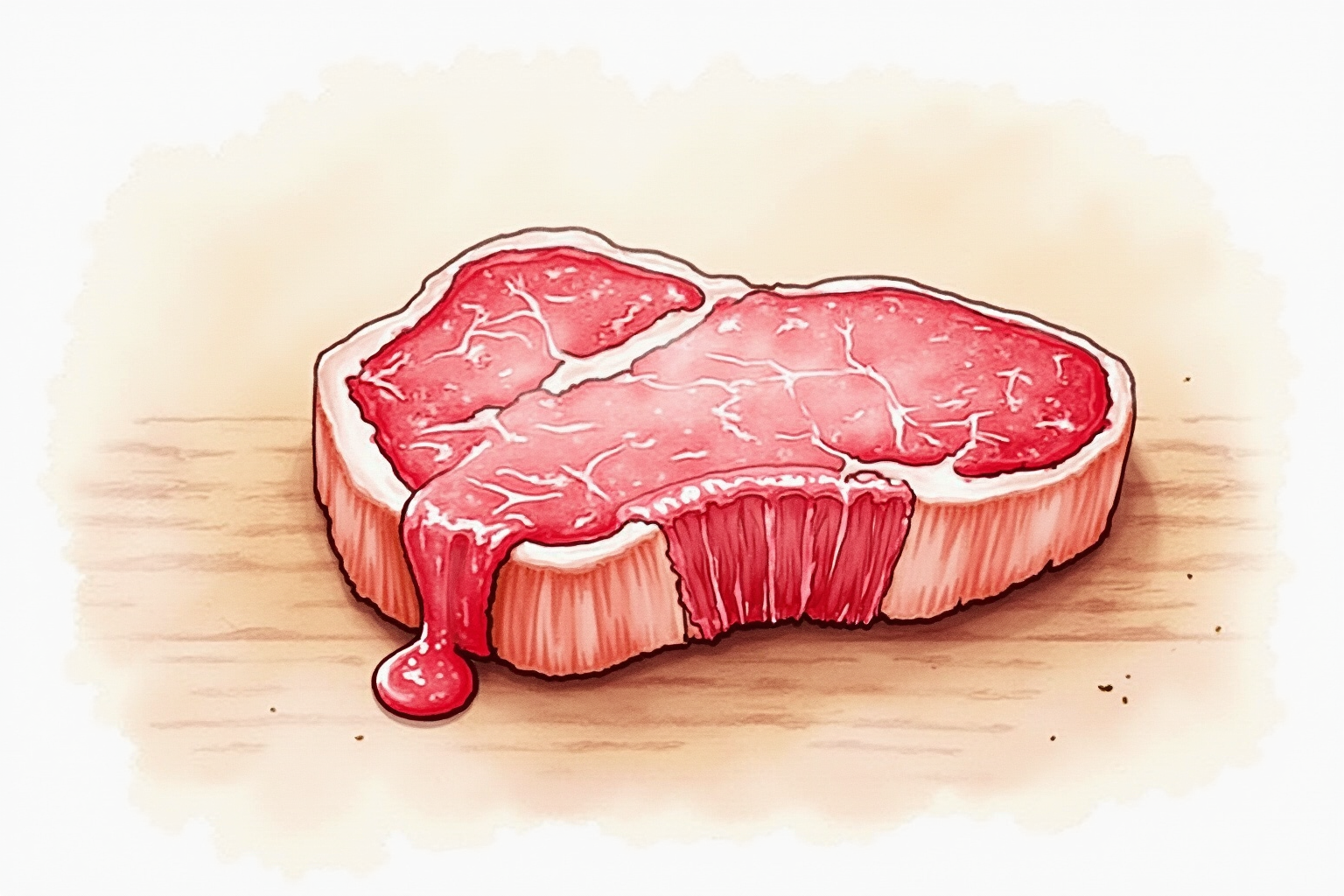
Two parallel processes happen inside resting meat:
Carryover cooking: Heat retained in the outer layers continues conducting toward the cooler interior. For a typical 1-inch steak, internal temperature rises 5-10°F over 5-10 minutes after removal from heat. A larger 3-inch roast can rise 15-25°F.
This is why the USDA and most professional chefs recommend pulling meat from heat at a temperature 5-10°F below the target. A medium-rare steak (final 135°F) gets pulled at 125-128°F; the carryover brings it to the target during rest.
Protein relaxation and juice redistribution: During cooking, muscle fibers contract violently as heat denatures the proteins. The contraction squeezes juices toward the cooler center of the cut, away from the heat. This is why a hot-off-the-grill steak shows pink juice flowing out when cut.
As the meat rests, the contracted fibers relax. The juices that were under pressure in the center migrate back outward, distributing evenly throughout the meat. A rested cut shows minimal juice flow when sliced because the juices are no longer pressed to the center.
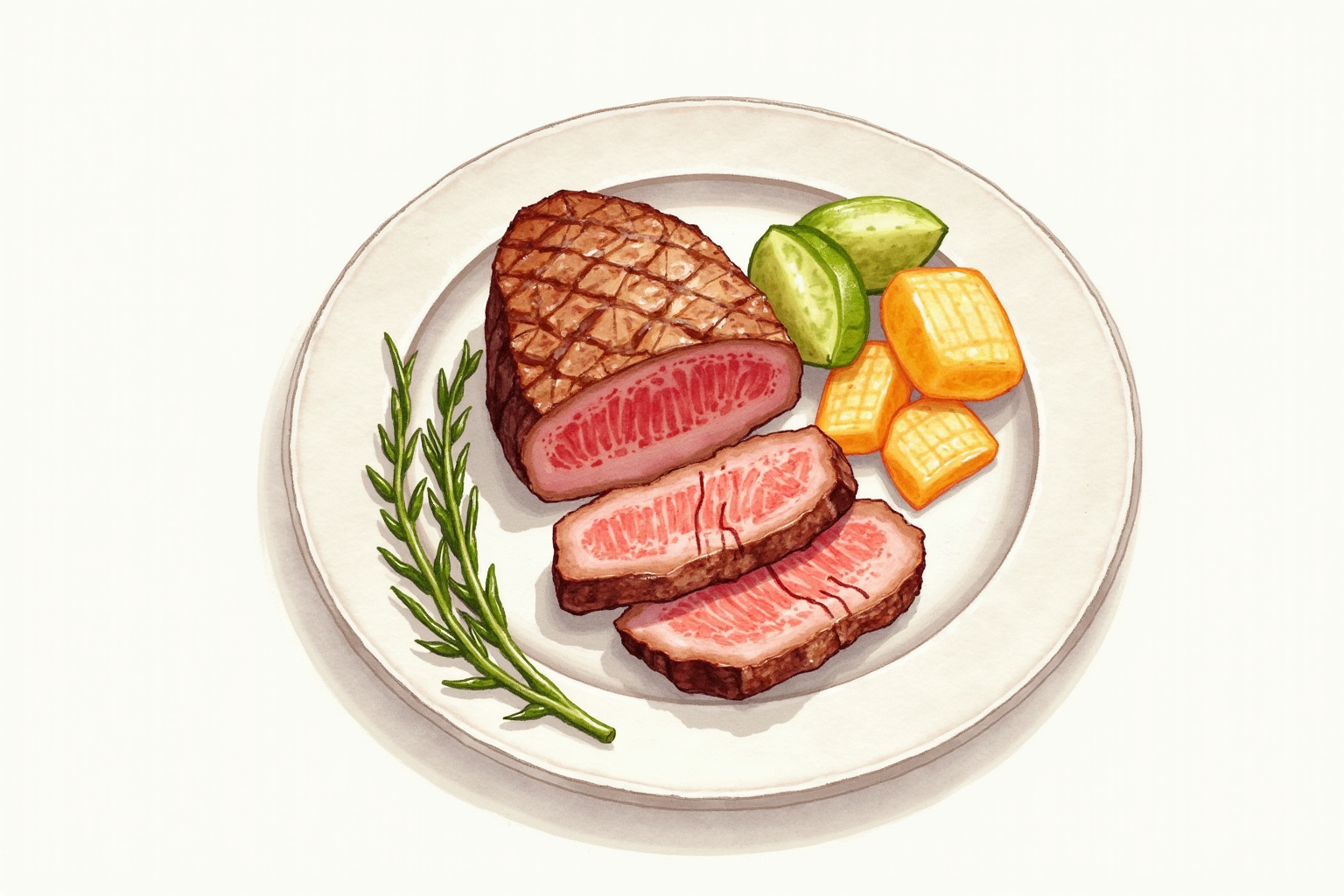
The visual difference between a 0-minute rest and a 10-minute rest is dramatic. Cook two identical steaks, slice one immediately and one after 10 minutes — the plate under the immediately-sliced steak has visible pink juice; the plate under the rested steak is nearly dry.
Resting times by cut
Different cuts need different rest times based on thickness and size:
Thin steaks (under 1 inch, e.g., flank, skirt, hanger): 3-5 minutes Standard steaks (1-1.5 inches, e.g., NY strip, ribeye, sirloin): 5-7 minutes Thick steaks (1.5-2 inches, e.g., bone-in ribeye, porterhouse): 8-10 minutes Roast chicken (3-4 lbs spatchcocked): 10-15 minutes Whole roast chicken (4-5 lbs): 15-20 minutes Pork tenderloin: 5-10 minutes Pork shoulder/butt (3-5 lbs): 20-30 minutes Beef roast (3-5 lbs sirloin tip, top round): 15-25 minutes Standing rib roast (6-12 lbs): 25-45 minutes Whole turkey (12-18 lbs): 30-45 minutes Smoked brisket (10+ lbs, post-cook): 1-2 hours (or longer in a “Cambro” hold) Lamb leg: 15-25 minutes Whole pork loin: 15-20 minutes
A useful general rule: rest time = half of cooking time, capped at 30 minutes for most cuts.
The foil tent — yes, but lightly
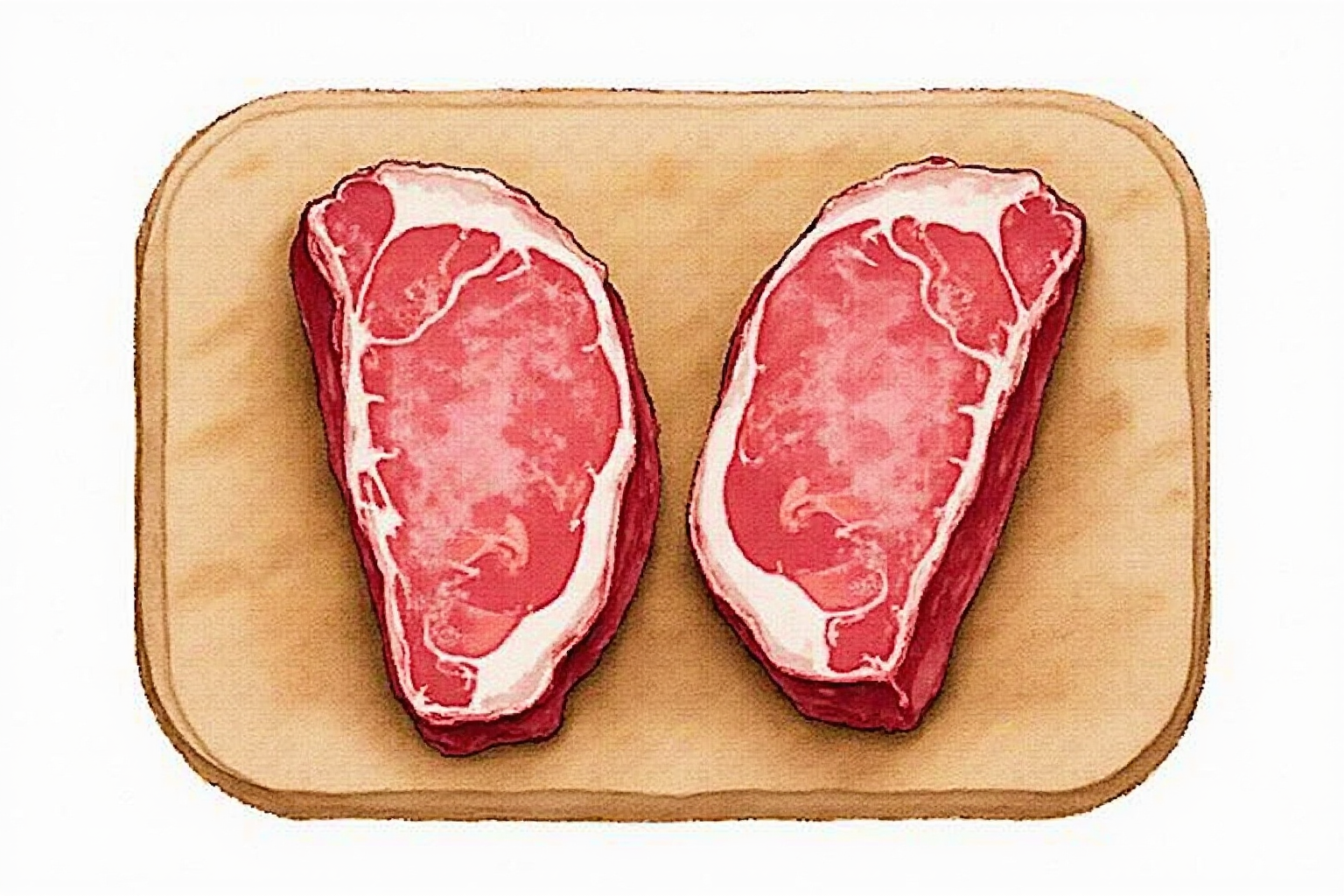
Loose foil tenting reduces heat loss during rest. The right configuration:
Correct: A piece of foil draped loosely over the meat, edges hanging off the sides. The foil reflects radiant heat back toward the meat, slowing the cooling rate by ~30%.
Wrong: Foil pressed tight around the meat or sealed at edges. This traps steam, which softens the crust that was carefully developed during searing. A rested steak with a soft crust feels mushy compared to one that retained its sear.
For very large items where temperature retention is critical (turkey, brisket), the proper hold is foil plus an insulated kitchen towel or cooler. This keeps the meat warm for 30-90 minutes without compromising the crust.
The foil also protects the meat from kitchen drafts and air currents that accelerate cooling.
Common mistakes
Rest time too short: The most common mistake. Eager cooks cut steak at 2-3 minutes when it needs 6-8 minutes. The visible juice loss tells the story; the cook blames the recipe or the meat, but the cause is impatience.
Rest time too long: Less common. After about 30 minutes, meat continues cooling beyond the comfort zone. For service, plan to slice and serve within the rest window.
No rest at all: Skipping the rest entirely is the worst case. The meat releases 30-50% more juice onto the plate when sliced immediately than when properly rested. The visual is unappetizing; the texture is dry.
Resting in a hot oven: Some recipes suggest resting in a warm (200°F) oven for large roasts. This works only if the oven is below the meat’s current internal temperature. Otherwise the meat continues cooking past target.
Tight foil seal: Discussed above. The soft-crust issue defeats the purpose of careful searing.
Tool picks across budgets
ThermoWorks Thermapen ONE (Instant-Read)
Price · $105-115 — best for resting verification
+ Pros
- · 1-second reading confirms carryover temperature reaches target
- · Lets you pull meat at exact pre-rest temperature
- · Pro-grade accuracy across the cooking range
− Cons
- · Premium price for resting-specific use
- · Annual battery replacement (CR2032)
Price, availability, and ratings can change; verify details on the retailer page before buying.
OXO Good Grips Carving Board with Well
Price · $35-50 — best resting surface
+ Pros
- · Deep juice well catches the small amount of juice released during slicing
- · Wooden surface doesn't dull knife edges
- · Large enough for whole turkey or large roasts
− Cons
- · Wood requires hand-washing (no dishwasher)
- · Larger size requires storage space
Price, availability, and ratings can change; verify details on the retailer page before buying.
Reynolds Wrap Heavy Duty Aluminum Foil
Price · $5-8 — best foil for tenting
+ Pros
- · Heavy-duty thickness holds tent shape without sagging
- · Widely available at any grocery store
- · Reusable for multiple resting sessions if handled gently
− Cons
- · Single-use mentality wastes material
- · Aluminum may react with acidic marinades (rinse before use)
Price, availability, and ratings can change; verify details on the retailer page before buying.
The buying decision
For serious home cooks, the combination of an instant-read thermometer (ThermoWorks Thermapen ONE), a carving board with juice well (OXO Good Grips), and heavy-duty foil covers the entire resting workflow. The total budget is around $150 — a one-time investment that improves every protein cooked in the kitchen for years.
For more casual cooks, the foil alone ($5-8) covers the basic resting need. Drape it loosely over the meat for the recommended rest time, transfer to a regular cutting board for slicing, and the resting benefit applies without specialized equipment.
The carving board with juice well is worth the upgrade if you regularly cook large roasts or whole birds. The well catches the (now-minimal) juice released during slicing and saves them for pan sauce. For weeknight steak dinners, a standard cutting board is fine.
Resting is the most under-utilized free-quality-improvement in home cooking. Adding 5-15 minutes of patience to the meal preparation produces measurably better results — juicier, more tender, more visually appealing. The technique costs nothing and produces consistent improvement across every cut of meat. Make resting a default; the results speak for themselves.
2026 AdSense quality update: how to use this guide in a real kitchen
This section was added on 2026-06-26 after a sitewide quality review. The goal is to make Meat Resting Time Data — Why It Matters and How Long (2026) more useful than a short reminder list: it should help a reader decide what to do, what to measure, and when to stop. For this topic, the main risk is that raw juices, marinades, tongs, platters, and thermometer probes can move bacteria to ready-to-eat food. The safe response is not a vague promise to “be careful”; it is to separate raw and cooked equipment, verify doneness with a thermometer, and clean the probe and work area between foods.
Use the guide as a kitchen workflow, not as medical advice. If someone is already ill, has a high-risk immune status, is pregnant, is an older adult, or is feeding young children, use official food-safety guidance and professional medical advice rather than experimenting with borderline food.
Decision workflow for raw meat and high-heat cooking
| Checkpoint | What to verify | Safer default | Evidence to keep |
|---|---|---|---|
| Before cooking | Is the ingredient cold, separated, and within date? | Start with clean hands, a clean board, and a clean tool set. | Package date, refrigerator temperature, or shopping time. |
| During prep | Can raw juices or dirty water reach ready-to-eat food? | Separate raw, cooked, and produce zones before the counter gets busy. | Which board, knife, plate, and towel were used. |
| During cooking or holding | Is there a measurable temperature or time control? | Use a thermometer, timer, shallow container, or cooler plan instead of memory. | Internal temperature, discard time, or cooling start time. |
| Serving | Will guests open, touch, or move the food repeatedly? | Serve smaller portions and refill from a controlled hot/cold source. | Time the first serving dish left the refrigerator, grill, or oven. |
| Leftovers | Do you know the time and temperature history? | Refrigerate promptly; discard when the history is unclear. | Container label with date and food name. |
| Cleanup | Could residue move to tomorrow’s food? | Wash, sanitize where appropriate, and air-dry before storage. | Tool or surface that needs a second pass. |
Three common failure scenarios
- The schedule slips. Guests arrive late, errands take longer than expected, or a storm changes the plan. When timing changes, reset the food-safety clock instead of stretching it. Move food back to controlled temperature, or write a new discard time.
- The workspace gets crowded. Phones, towels, packaging, pets, and drink cups enter the prep area. Clear one clean landing zone for ready-to-eat food and keep raw-food tools visibly separate.
- A food looks fine but the history is unknown. The dangerous version is color-based doneness, one platter for raw and cooked food, or reusing marinade as sauce. Smell, color, and texture are not reliable safety tests. When the time/temperature history is missing, discard the food.
Household checklist
- Put a refrigerator thermometer where it can be seen without moving food.
- Keep at least one instant-read thermometer clean and easy to reach.
- Use shallow containers for dense leftovers and label the date.
- Keep raw-meat boards, produce boards, and serving platters visually different.
- Decide the discard rule before cooking begins, not after everyone is tired.
- Re-check official sources when cooking for high-risk people or large groups.
Why this page exists
Many food-safety articles repeat the same four words—clean, separate, cook, chill—without showing the handoffs where people actually fail. CookNest Daily articles now include the handoff: what to measure, what to separate, what to label, and what to discard. That is the value this page adds for readers preparing a real meal.