Cutting Board Sanitizing After Raw Meat Routine
A food-safety routine for cleaning and sanitizing cutting boards after raw meat or poultry without spreading germs to produce, sinks, towels, or ready-to-eat food.
Safety fact check included
CookNest Daily articles surface source counts, timing assumptions, kitchen-test notes, and food-safety caveats. This label means editorial safety review, not a substitute for local food-code or medical guidance.
A cutting board routine is not just “wash it when you remember.” After raw meat or poultry touches a board, the next risk is usually the path from board to sink, towel, handle, produce, or ready-to-eat plate. This 2026 guide translates USDA, CDC, FoodSafety.gov, FDA, and extension guidance into a kitchen workflow that is practical without being casual about cross-contamination.
Quick decision table
| Situation | Safer choice | Mistake to avoid |
|---|---|---|
| Raw meat board is still on the counter | Keep produce and ready-to-eat foods away until the board, knife, counter, and hands are cleaned | Rinsing the board beside salad ingredients |
| Juices touched the counter or sink edge | Clean visible soil first, then sanitize the food-contact path | Spraying sanitizer onto crumbs, fat, or residue |
| Wood or plastic board is deeply scarred | Retire it from raw-meat duty or replace it | Assuming sanitizing reaches deep knife grooves |
| Towel was used during raw prep | Move it to laundry before touching clean dishes | Drying the sanitized board with a contaminated towel |
One-page routine
- Name the risk before starting.
- Separate the safe zone from the risky zone.
- Set the stop, swap, or escalation trigger.
- Keep official-source checks and product/manual checks in the text workflow, not in image captions.
- Review the result after the meal prep, cleanup, or board-drying step ends.
1. Create a raw zone before opening the package
Place the raw board, knife, tray, and waste path before the package is opened. Keep produce, bread, plates, and lunch containers outside the splash zone so the cleanup routine does not need to rescue a chaotic counter.
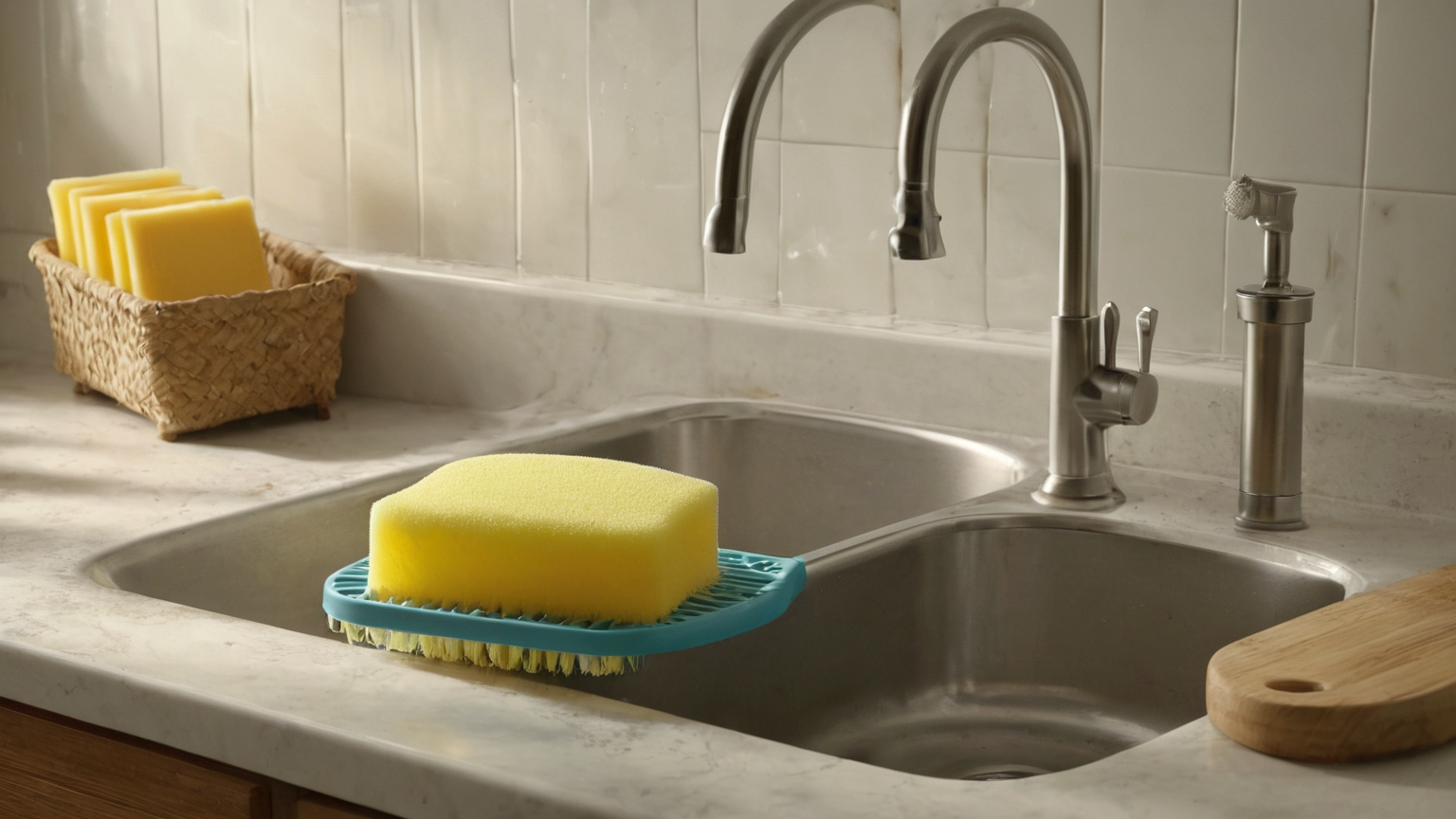
Reader-use detail: decide the cleanup route before raw meat is opened. A separated board, clean sink path, replaced towel, and air-drying spot prevent the common mistake of spreading residue after the cutting step is technically finished.
2. Clean first, sanitize second
Sanitizer is not a shortcut for removing food residue. Scrape, wash with hot soapy water, rinse, and only then use a safe sanitizing method appropriate for the board material and product directions.
3. Treat the sink as part of the route
The board often contaminates faucet handles, sink rims, sponge areas, and towel edges. Clean the route you actually used, not only the rectangle of board surface.
4. Use separate boards when the meal has ready-to-eat parts
A second board for produce or cooked food is simpler than trying to remember every touch. Color coding helps only when the household actually follows it.

5. Dry and store so the next meal starts clean
Let boards dry upright with airflow, discard or replace boards with deep grooves, and reset towels. The routine is finished when the next cook can start without guessing which surface is safe.
Practical checklist
- Verify the latest official source or manufacturer/manual guidance when conditions, recalls, alerts, or symptoms matter.
- Keep the physical setup simple enough for another household member or passenger to follow.
- Use conservative thresholds for children, older adults, medical conditions, poor visibility, heat, moisture, or contamination risk.
- Do not rely on AI-generated image details for measurements, labels, dashboard symbols, sanitizer ratios, temperatures, or medical decisions.
- Avoid affiliate purchases unless the product directly solves a reader need; this article intentionally prioritizes safety and trust over product density.
- Save a short note about what worked so the next decision is easier.
FAQ
Board-by-board cleanup sequence
A safer routine starts before the meat package opens. Put the raw-meat board near the sink, keep the produce board across the counter, and move ready-to-eat food away from the splash path. When prep ends, throw away packaging, move utensils directly to the wash zone, and wash hands before touching faucet handles, refrigerator pulls, spice jars, or phones. The common failure is not forgetting that raw meat is risky; it is touching six clean objects while carrying that risk across the kitchen.
Clean visible residue first. Scrape or wipe food debris into the trash, wash the board and knife with hot soapy water, rinse, and then sanitize according to the board material and sanitizer directions. Sanitizer applied on top of fat, crumbs, or stuck-on juices is less reliable than a two-step clean-then-sanitize routine. If a board has deep grooves, swelling, splitting, or odors that persist after cleaning, retire it from raw-meat duty.
Towel, sponge, and sink rules
The towel used during raw prep should not become the drying towel for clean dishes. Move it to laundry, reset the counter towel, and let the board air-dry upright when possible. Sponges and dishcloths can spread residue if they are used as universal erasers, so keep the cleanup tool itself part of the plan. Clean the sink rim and nearby counter area if the board or juices touched them.
Ready-to-eat protection check
Before salad, fruit, bread, cooked meat, or lunch containers return to the counter, ask three questions: did raw juices touch this surface, did the same hand touch the handle or towel, and did the board dry in a place where it could drip onto clean dishes? If the answer is uncertain, reclean the path. The few extra minutes protect the meal better than trying to remember every contact point later.
Material-specific caution
Plastic, wood, composite, and flexible mats all need the same principle: a smooth food-contact surface that can be fully cleaned. Plastic boards may tolerate dishwasher cycles when the manufacturer allows it, but warped boards can trap water and residue. Wood boards should be cleaned promptly and dried with airflow; deep splits or dark grooves are reasons to downgrade the board from raw-meat use. Flexible mats are convenient, but they can curl, slide, and drip juices across a counter if someone carries them casually to the sink.
Do not let color coding become false confidence. A red board helps only if the knife, towel, hands, counter edge, and sink path are also managed. The best system is boring: separate zones, clean hands, clean first, sanitize second, air dry, and replace damaged boards before they become permanent contamination traps.
Final reader check
Before using this cutting-board routine, compare the advice with the exact food, board material, sanitizer label, dishwasher instructions, and household risk level in front of you. If an official food-safety source, product label, or local food-service rule says to be more cautious, choose the more cautious path. The goal is not to complete a checklist for its own sake; the goal is to keep raw-meat residue away from ready-to-eat food.
For kitchens with multiple cooks, tape the sequence inside a cabinet: raw board out, ready-to-eat food away, hands washed, board washed, surface sanitized, towel replaced, board air-dried. A visible routine matters because cross-contamination often happens when someone new joins halfway through prep.
Practical planning worksheet
This section was added on 2026-06-26 after a sitewide quality review. The goal is to make Cutting Board Sanitizing After Raw Meat Routine more useful than a short reminder list: it should help a reader decide what to do, what to measure, and when to stop. For this topic, the main risk is that raw juices, marinades, tongs, platters, and thermometer probes can move bacteria to ready-to-eat food. The safe response is not a vague promise to “be careful”; it is to separate raw and cooked equipment, verify doneness with a thermometer, and clean the probe and work area between foods.
Decision workflow for raw meat and high-heat cooking
Three common failure scenarios
- The schedule slips. Guests arrive late, errands take longer than expected, or a storm changes the plan. When timing changes, reset the food-safety clock instead of stretching it. Move food back to controlled temperature, or write a new discard time.
- The workspace gets crowded. Phones, towels, packaging, pets, and drink cups enter the prep area. Clear one clean landing zone for ready-to-eat food and keep raw-food tools visibly separate.
- A food looks fine but the history is unknown. The dangerous version is color-based doneness, one platter for raw and cooked food, or reusing marinade as sauce. Smell, color, and texture are not reliable safety tests. When the time/temperature history is missing, discard the food.