Chef Knife vs Santoku — 2026 Comparison for Home Cooks
Curved-belly chef knife vs flat-edge santoku, compared on rocking-cut motion, blade geometry, edge angles, and which one fits the average home kitchen — with the maintenance habits that matter.
Safety fact check included
CookNest Daily articles surface source counts, timing assumptions, kitchen-test notes, and food-safety caveats. This label means editorial safety review, not a substitute for local food-code or medical guidance.
The single most-used kitchen tool produces the most arguments online. The chef knife vs santoku debate has been going for decades, intensified by the Japanese knife boom of the 2010s and the cooking-television generation’s preference for European-style technique. The truth is less dramatic than either camp suggests — both knives work, the differences are technical, and the right pick depends on which cutting motion comes naturally and which kinds of food dominate your kitchen.
This article compares the two knife styles on the criteria that actually affect daily use: blade geometry, edge angle, cutting motion, and the maintenance habits that determine whether the knife stays sharp through years of use.
- Blade geometry — curved belly vs flat edge
- Edge angle differences and cutting force impact
- Rocking cut vs push cut — which one your hand prefers
- Steel quality and edge retention by price tier
- Top picks across $80-300 budget range
Blade geometry — the curve vs the flat
The defining difference between a chef knife and a santoku is the blade profile.
A chef knife has a curved belly — the cutting edge curves upward from heel to tip in a smooth arc. This curve enables the “rocking cut” motion: the tip stays in contact with the cutting board while the heel rises and falls through ingredients. The motion is efficient for mincing, herb-chopping, and high-volume veggie prep. The German style (Wüsthof, Henckels, Zwilling) has a pronounced belly; the French style is slightly flatter but still curved.
A santoku has a flat edge — the cutting line is nearly parallel to the cutting board for most of its length, curving up sharply only at the tip. This flat profile encourages the “push cut” motion: the entire blade comes down through the ingredient at once, with a slight forward push. The motion is efficient for clean slices and precise cubing.
Most home cooks default to whichever motion they learned first. Cooking videos and TV chefs predominantly demonstrate the rocking cut, which is why chef knives are more familiar in Western home kitchens. Japanese cooking instruction emphasizes push cuts, which is why santoku is more common in Japanese home kitchens.
Neither motion is universally better — they suit different ingredients. Rocking cuts work well for fluffy herbs and onion mince. Push cuts work well for clean slices of dense vegetables and meat. Most professional kitchens use both motions even on a single ingredient.
Edge angle and cutting force
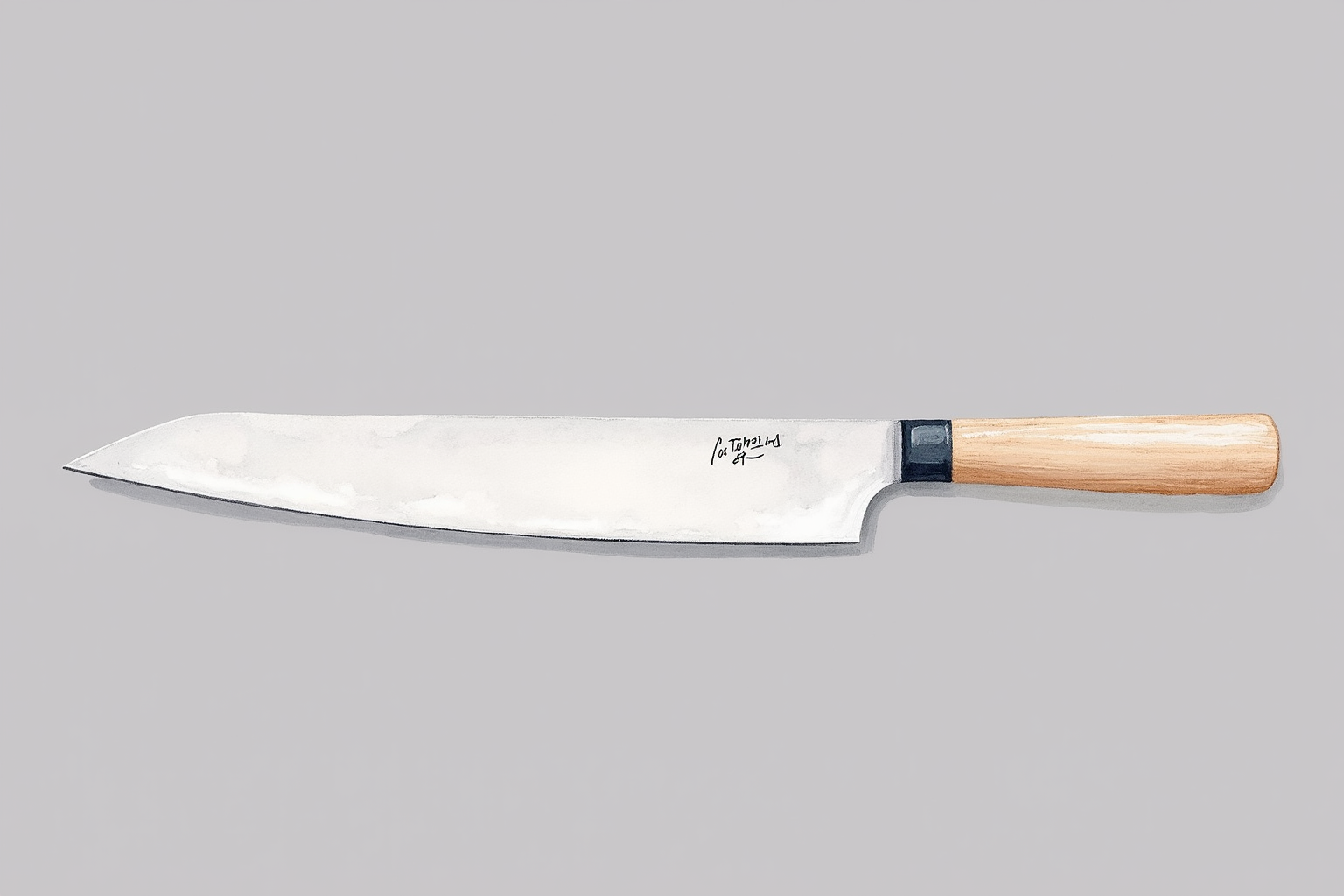
Beyond the profile shape, the edge angle determines how sharp the knife can get and how much force it takes to cut.
German-style chef knives typically grind both sides of the edge at 18-22 degrees, producing a total edge angle of 36-44 degrees. This wider angle produces a more durable edge — it tolerates contact with bone, frozen ingredients, and harder cutting boards (glass, ceramic). The trade-off is that more force is required to push the wider edge through dense food.
Japanese-style santoku typically grind both sides at 12-15 degrees, producing a total edge of 24-30 degrees. The narrower angle creates a noticeably sharper edge — the kind that slices a tomato by gravity alone. The trade-off is fragility: hitting bone or trying to cut frozen meat will roll or chip the edge.
The angle difference also affects cutting style. A 30-degree santoku edge cuts cleanly with light pressure, suiting push cuts. A 40-degree chef knife edge cuts adequately with moderate pressure, suiting the rocking motion that uses gravity and weight rather than slicing force.
For home use, both edges work for almost any task except hard frozen food and bone-in cuts. Cut frozen meat with a saw, not a knife.
Rocking cut vs push cut — finding your hand
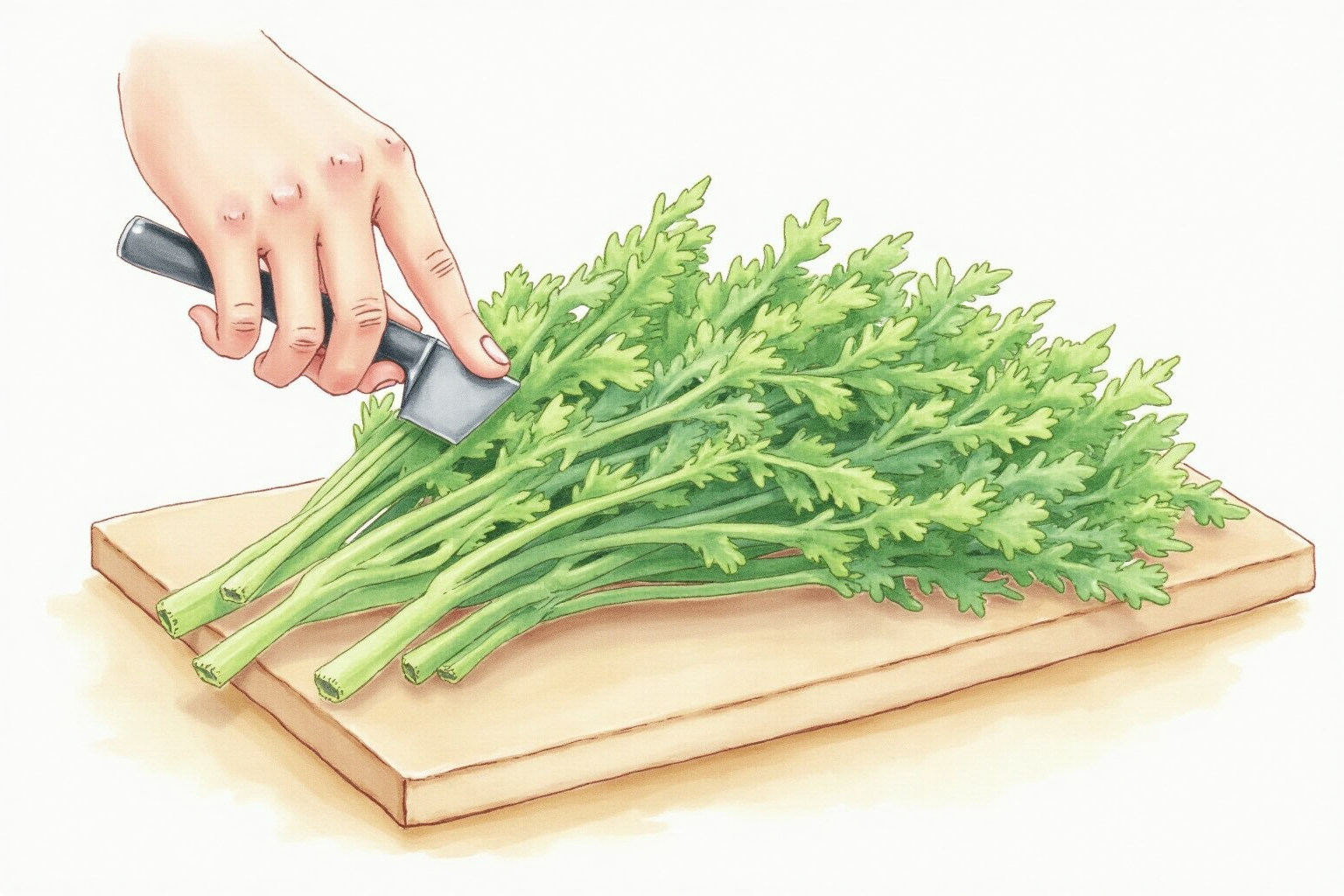
The choice between knives often comes down to which motion you already use without thinking.
Watch yourself mince garlic. If you rock the knife heel-to-tip while keeping the tip on the board, you’re a chef-knife user. If you slice straight down and pull the heel forward through the ingredient, you’re a santoku user.
Watch yourself julienne carrots. Chef-knife users tend to use the curve and rock through each cut. Santoku users tend to make precise push-down cuts.
Both motions can be learned, but the unconscious habit is hard to retrain. For someone with 10+ years of cooking who never thinks about which motion they use, switching from chef knife to santoku (or vice versa) feels foreign for the first few weeks.
If you’re not sure which motion your hand prefers, the chef knife is the safer default — it accommodates both rocking and push cuts (just less efficiently for the latter). The santoku is more specialized — it works well for push cuts and acceptably for rocking, but the flat profile produces awkward rocking motion.
Steel quality and edge retention
Knife steel grade dramatically affects how long the edge stays sharp.
German X50CrMoV15 (Wüsthof, Henckels) is a forgiving stainless steel at HRC 56-58 hardness. The edge holds well for home use and is easy to re-sharpen on a basic stone or pull-through sharpener. The trade-off is that the edge does not get as sharp as Japanese steel and dulls slightly faster.
Japanese VG-10 (Shun Classic, Tojiro DP) is a higher-carbon stainless steel at HRC 60-62 hardness. The edge takes a sharper grind and holds longer than German steel. The trade-off is that re-sharpening requires more technique and finer stones.
Japanese SG-2 or Powder Steel (Shun Premier, Miyabi Birchwood) is a premium powder-metallurgy steel at HRC 62-64 hardness. The edge holds extremely well — months of home use without resharpening. The trade-off is the premium price ($200-400+) and difficulty of re-sharpening at home.
For most home cooks who sharpen once a year, a mid-range Japanese knife (VG-10 at HRC 60-62) provides the best ratio of sharpness to maintainability. The premium powder steels are worth it only for users who appreciate the difference and don’t mind professional sharpening services.
Top picks across budgets
Wüsthof Classic Ikon 8-Inch Chef's Knife
Price · $180-220 — best Western chef knife pick
+ Pros
- · X50CrMoV15 steel at HRC 56-58 — forgiving for home use
- · Forged construction with full tang and Pakka wood handle
- · Comfortable curved belly suits rocking-cut motion
− Cons
- · Heavier than Japanese alternatives at 9-10 oz
- · Wider edge angle requires slightly more cutting force
Paid affiliate link. Price, availability, and ratings can change; verify details on the retailer page before buying.
Shun Classic 7-Inch Santoku
Price · $155-200 — best Japanese santoku pick
+ Pros
- · VG-10 steel at HRC 60-62 — superb sharpness and retention
- · Granton edge dimples reduce food sticking on slices
- · Lightweight at 6-7 oz reduces wrist fatigue on long prep
− Cons
- · Narrower edge angle is more fragile against bone or frozen food
- · Premium price reflects VG-10 steel and Shun brand
Paid affiliate link. Price, availability, and ratings can change; verify details on the retailer page before buying.
Victorinox Fibrox Pro 8-Inch Chef's Knife
Price · $45-60 — best budget chef knife pick
+ Pros
- · Excellent edge sharpness for the price tier
- · Lightweight polypropylene handle is dishwasher-tolerant
- · Used in professional kitchens for line work
− Cons
- · Plastic handle aesthetic less premium than wood
- · Stamped (not forged) blade construction
Paid affiliate link. Price, availability, and ratings can change; verify details on the retailer page before buying.
The buying decision
For most home cooks who prefer the rocking-cut motion (most common in Western kitchens), the Wüsthof Classic Ikon at $180-220 is the right premium pick. It handles 5-10 years of daily use with proper sharpening and feels balanced for either small or large hands.
For home cooks influenced by Japanese cooking or who prefer push-cut precision, the Shun Classic 7-inch santoku at $155-200 produces dramatically cleaner cuts than any German knife in the same price range. The VG-10 steel justifies the premium for users who appreciate sharpness and can keep the edge fragile from bone and frozen food.
For budget-conscious starts, the Victorinox Fibrox Pro at $45-60 is the workhorse used in countless professional and home kitchens. The edge sharpness rivals knives 3-4 times the price; the plastic handle is the visible compromise.
Avoid knife sets under $100 — the total price is impressive but the individual knife quality is below the single Victorinox at the same total price. Buy one good knife at the price tier you can afford, learn to maintain it, and add a paring knife later.
Knife selection is personal. The right knife is the one your hand reaches for without thinking. If you have access to test both styles before buying — at a kitchen store demo, a friend’s kitchen — the 30-second comparison matters more than a year of online debate.